Welcome to Liquid Gravity, a site presenting a testable theory of everything. Unlike many speculative frameworks, the LGA model builds on established quantum research and offers measurable predictions. It provides intuitive, experimentally accessible explanations for key phenomena and aims to bridge gaps between quantum mechanics and gravity.
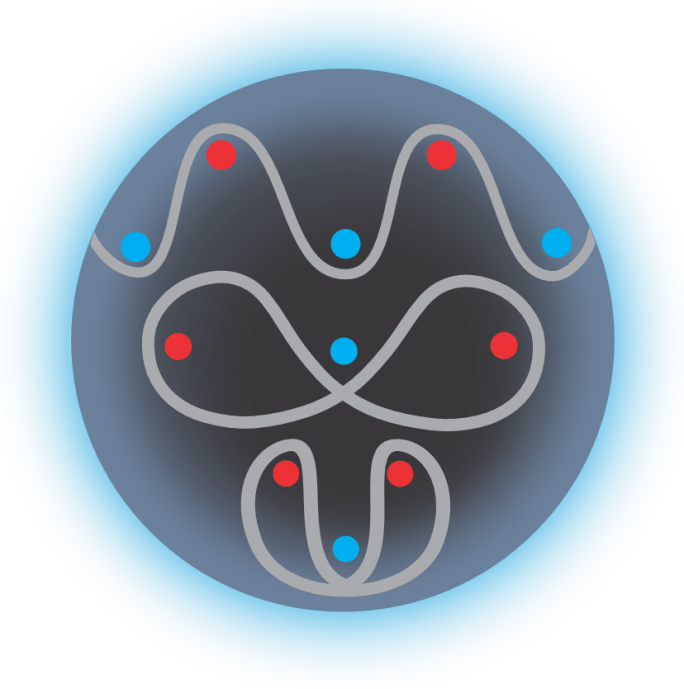
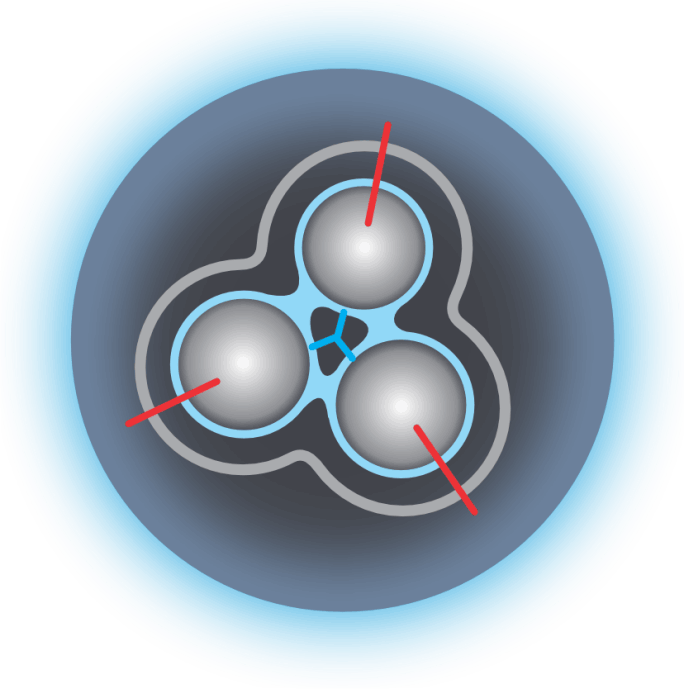
The LGA model describes nucleons as standing waves within a highly condensed superfluid, giving rise to dynamic, emergent quantum mechanisms.
.
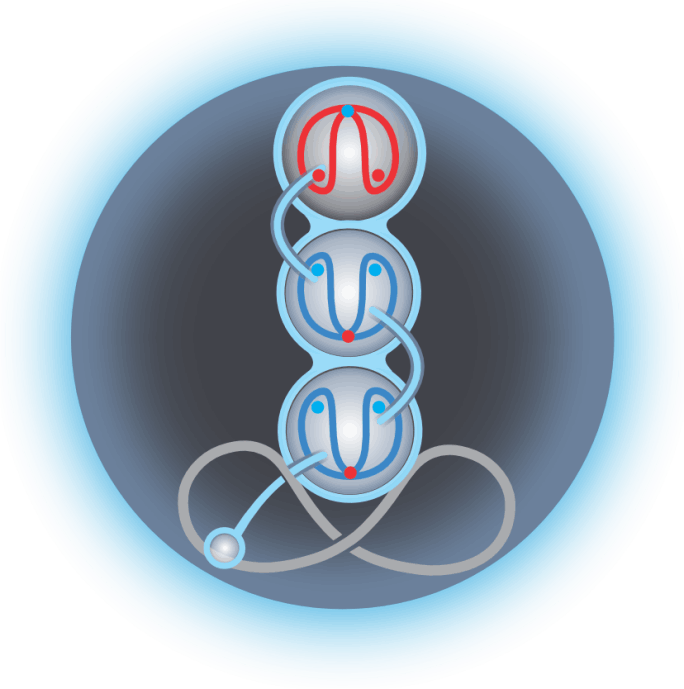
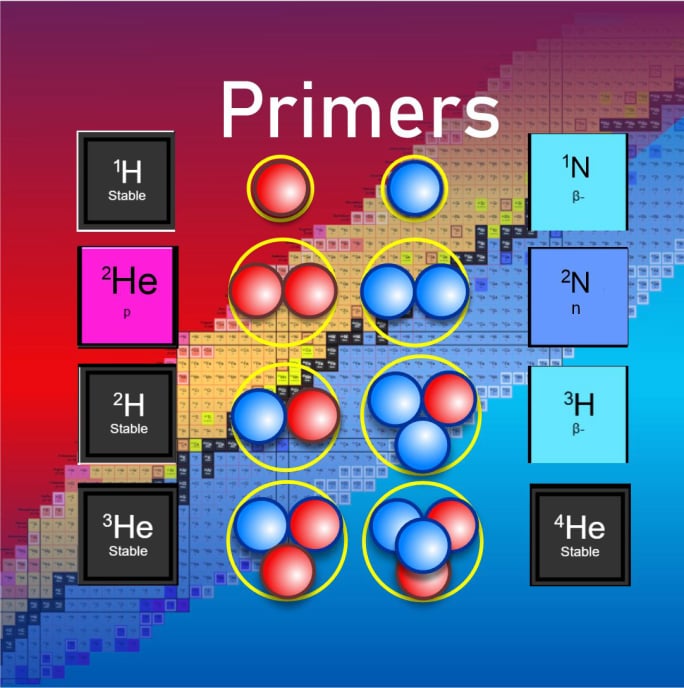
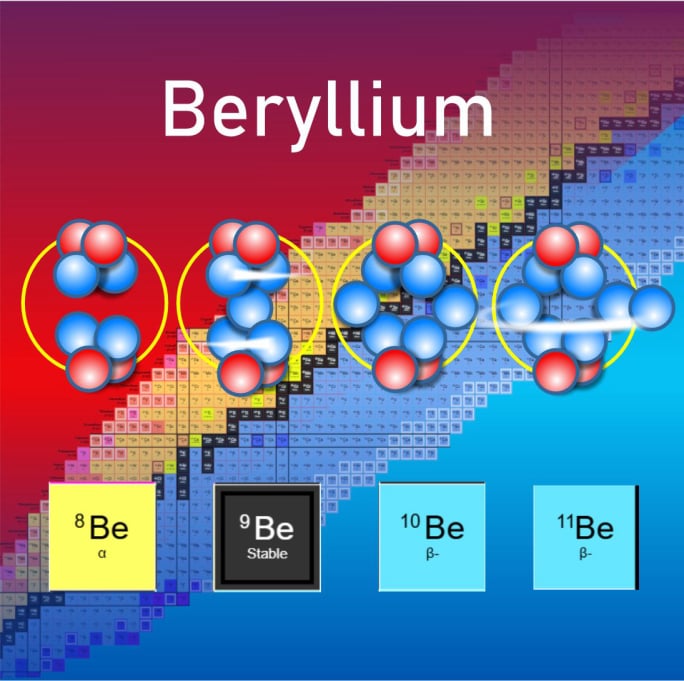
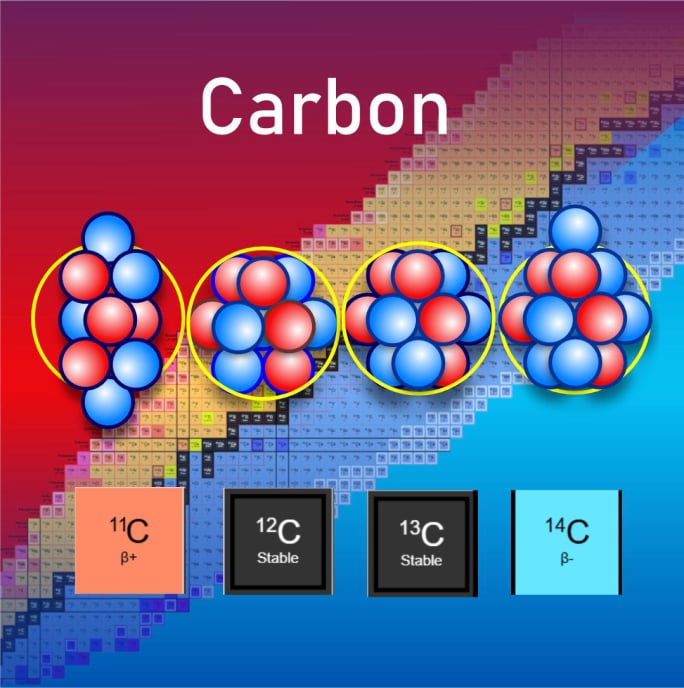
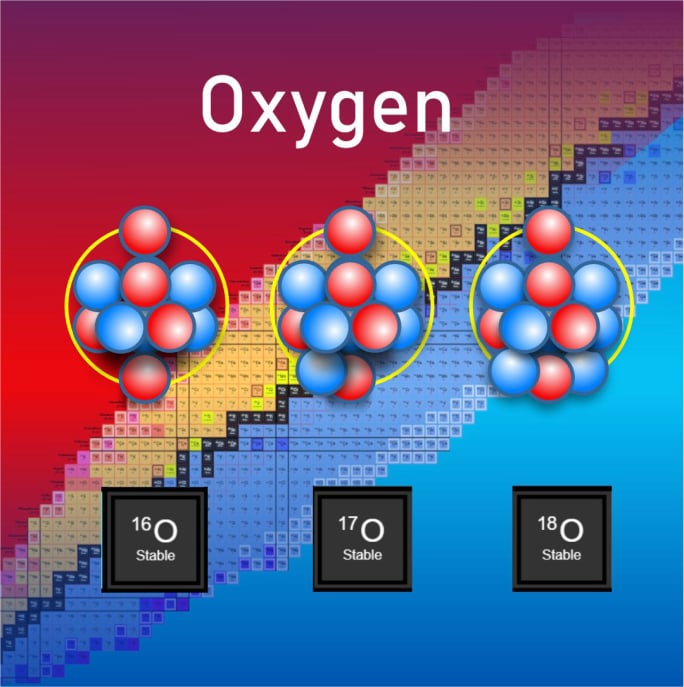
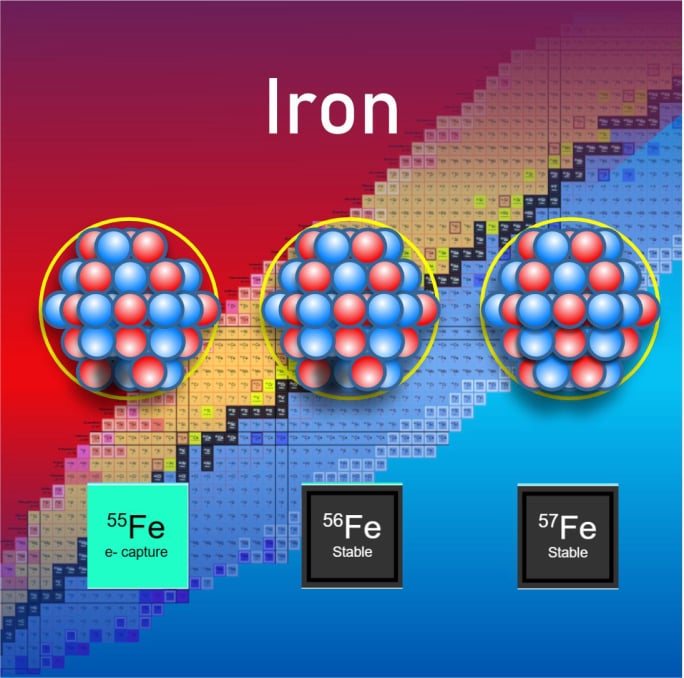
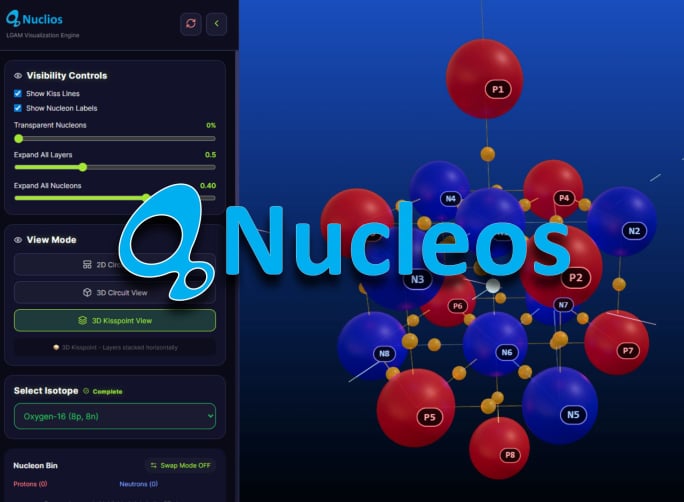
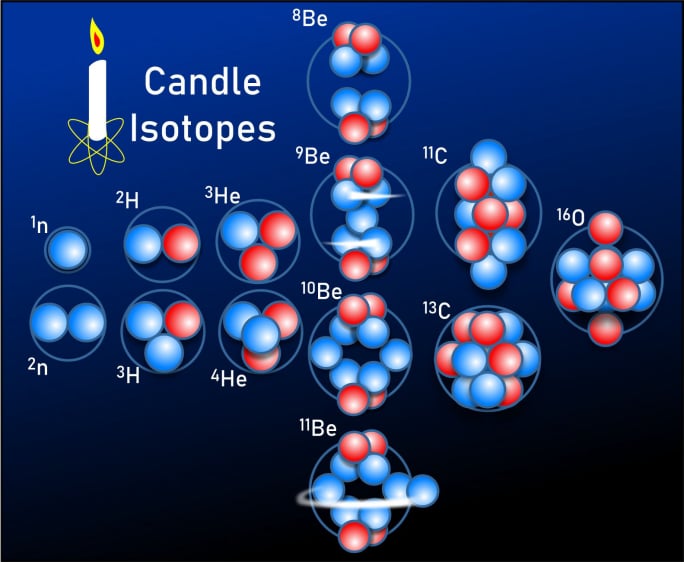
The LGA model proposes protons and neutrons form linked chains inside the nucleus, explaining how particles organize and hold atoms together.
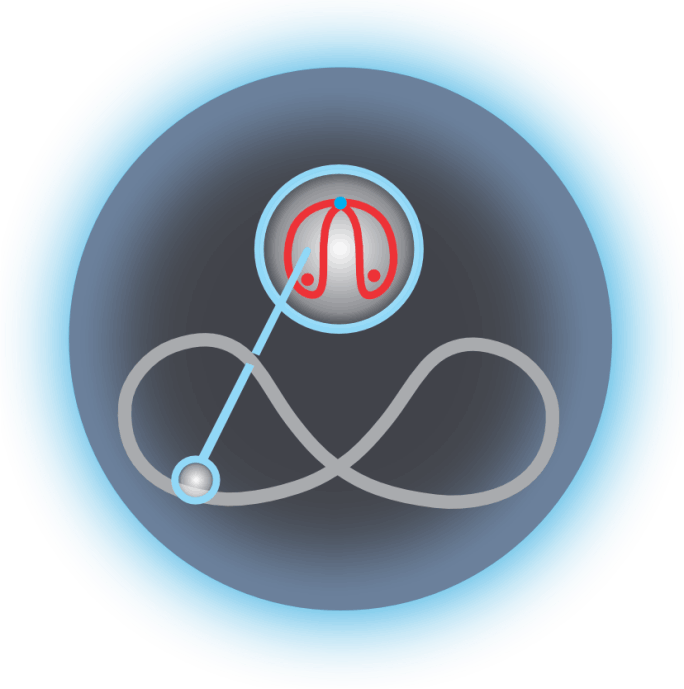
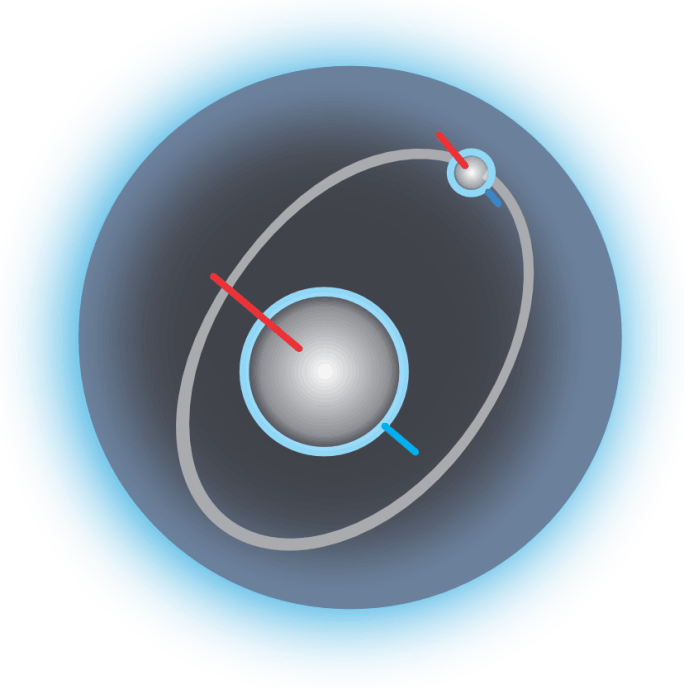
The LGA model shows electron spin emerging from the nucleus by directing electrons along a 720° figure‑8 trajectory, producing alternating spin‑up and spin‑down states.
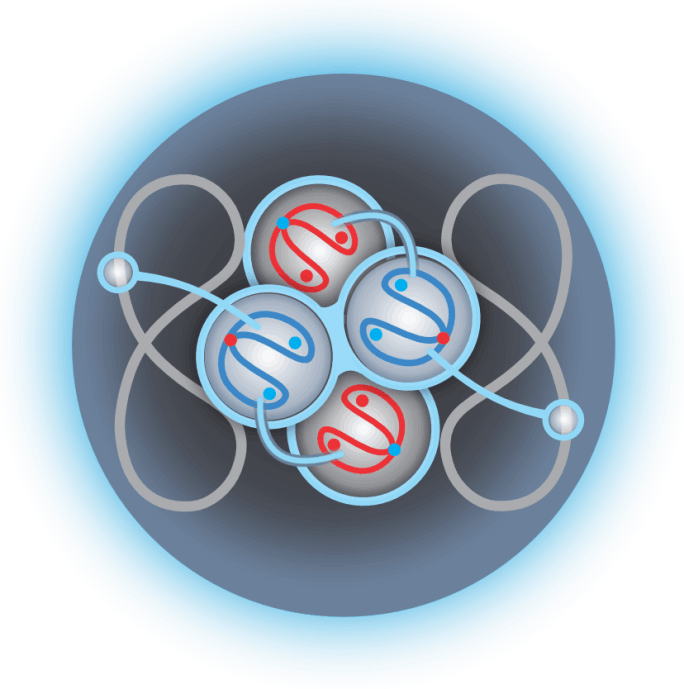
The LGA model explains how quantum spin can collapse from a 720° cycle into a stable 360° left- or right‑handed cycle, and how this can flip between spin directions.
The LGA model suggests entanglement radiates from the nucleus to preserve atomic symmetry and stability. Entanglement may persist briefly outside the atom but is vulnerable to decoherence.
In the Liquid Gravity Atomic (LGA) model, gravitational propagation is confined within matter rather than in free space, making gravity a dominant and measurable interaction at quantum scales.
In the LGA model, gravitational structures form from accumulated negative pressure in a pervasive medium, which over long timescales produces an uneven dark‑matter distribution.
The LGA model makes several testable predictions—feasible with today’s technology—including an experiment that could identify and control the mechanism behind quantum probabilities.
If one could describe a single universal medium, it would have these properties:
- invisible yet filling all of space
- endows elementary particles with mass
- transmits electromagnetic waves
- produces spacetime curvature around masses
- governs the flow of time
- mediates action at a distance
- underlies all fundamental interactions
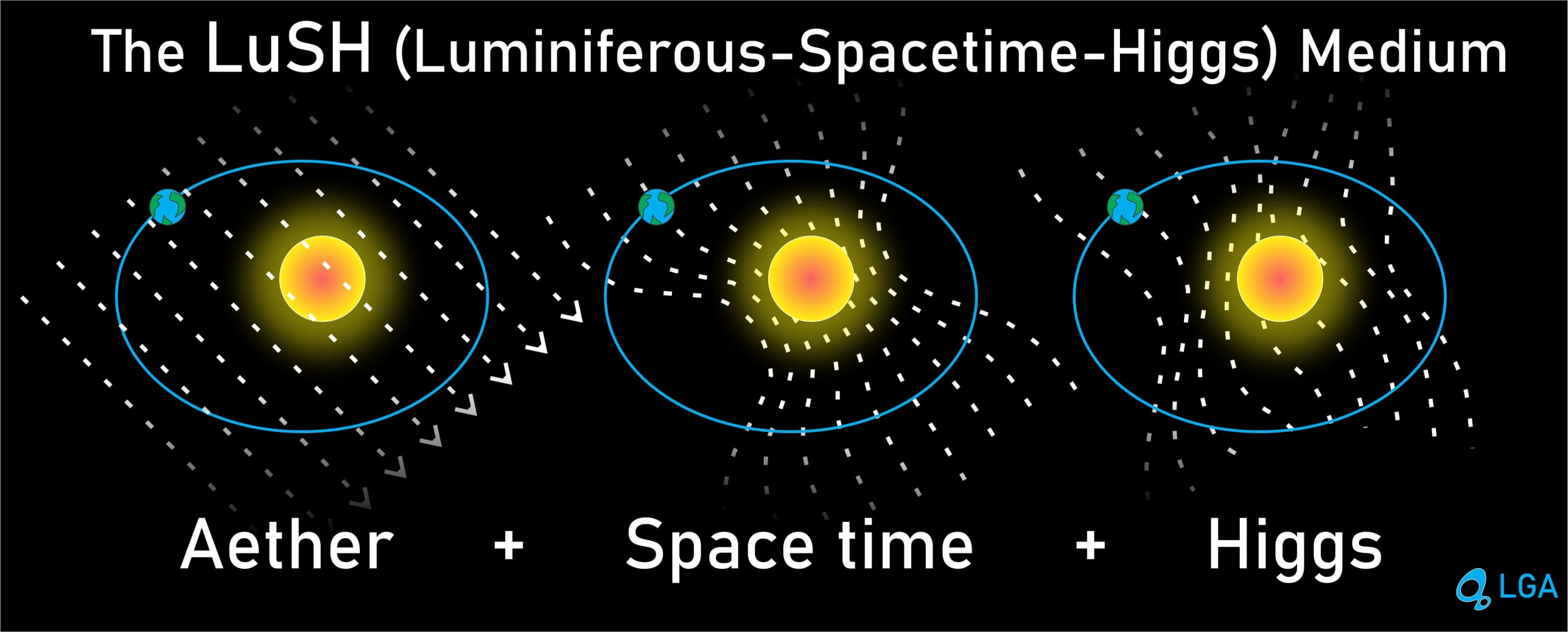
This concept unites ideas from the luminiferous aether, Einstein’s spacetime, and the quantum Higgs field into a single substrate: LuSH (Luminiferous‑Spacetime‑Higgs) medium.
Although the historic luminiferous aether is often regarded as obsolete, modern physics still uses all‑pervasive fields (e.g., the Higgs field, electromagnetic fields, and the spacetime manifold). Mainstream theories model these phenomena with separate frameworks—Higgs for mass, Maxwell for electromagnetism, and general relativity for spacetime curvature—which each explain many observations but remain conceptually and mathematically distinct. A full quantum description of gravity is still lacking.
Positing a single medium need not contradict existing theories; rather, it offers a unifying substrate in which Higgs‑like mass generation, electromagnetic propagation, and spacetime geometry are different manifestations of the same underlying entity. The central challenge is to show how this medium produces gravity at the quantum scale.
The Liquid Gravity Atomic (LGA) model adopts this unified view: a single universal medium whose local structure and dynamics give rise to mass, forces, and wave propagation, produce the geometric effects we call gravity, and explain how gravity operates at the quantum scale.
What is waving? A fresh way to look at the universe
Many physical phenomena—from quantum fluctuations and atomic standing waves to the vast patterns of gravitation—can be described as waves. That raises a simple question: what is actually waving?
The LGA view proposes a single underlying medium whose excitations appear at different scales as everything we call “waves.” These excitations are distinguished by scale, structure, and motion. In short: it’s the medium itself, with specific properties, that unifies all wave behavior.
Shared features of all waves
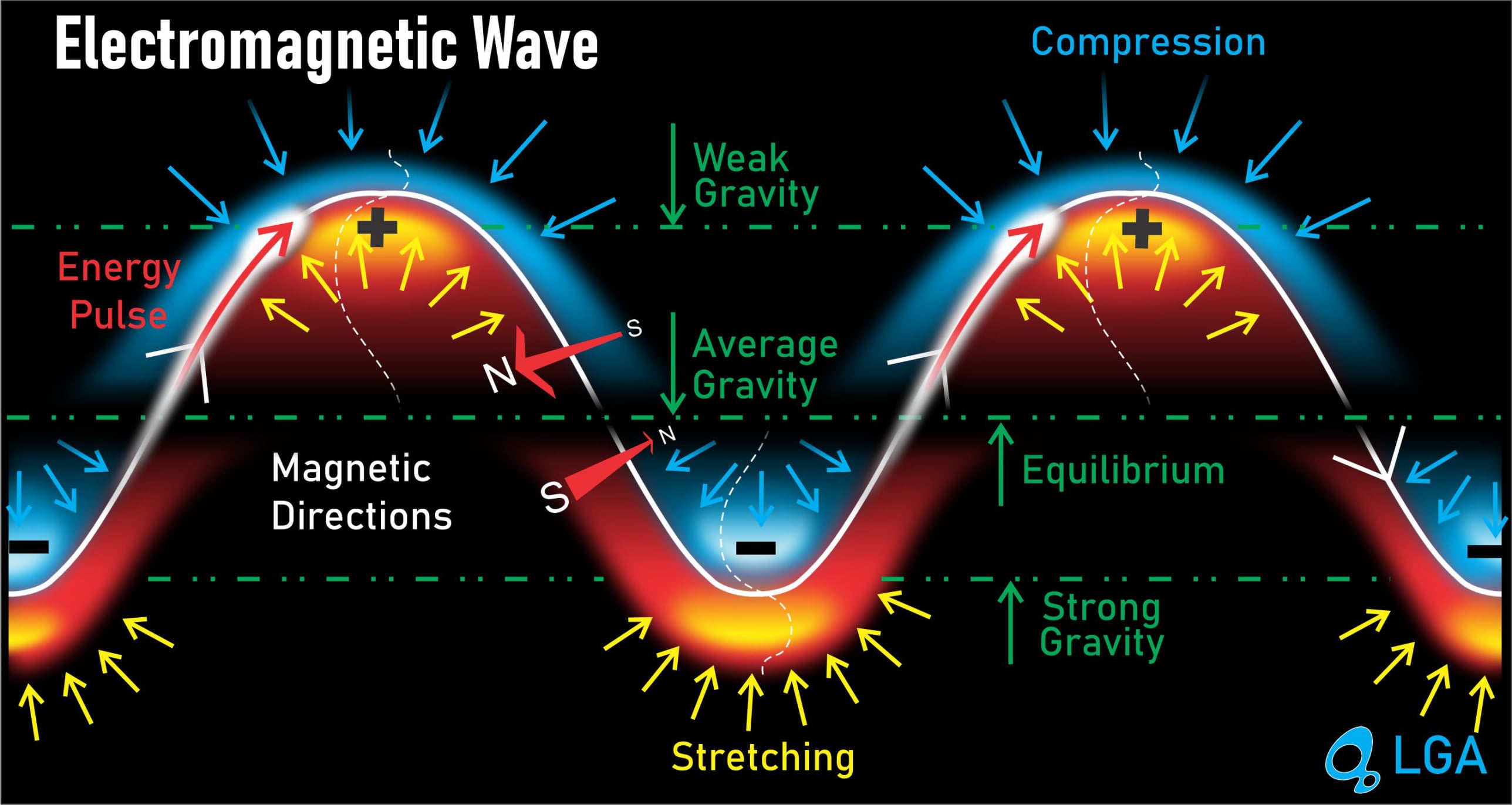
- Positive expansion — analogous to dark energy
- Negative compression — analogous to dark matter
- Fringe compression around regions of positive expansion
- Fringe expansion around regions of negative compression
- A background equilibrium — gravitational or zero-point energy
- Energy pulses
Energy in the medium appears in quantized pulses that form different wave patterns. These pulses can be positive or negative and typically arise from interactions among waves. Large-scale interactions break down into progressively smaller wave structures, eventually producing standing waves that behave like particles, and traveling waves we perceive as the light spectrum.
Cosmic waves and structure
At the largest scale, slow-moving gravitational waves shape the universe’s large-scale structure. Over millions of years their propagation sculpts galaxies, clusters, and cosmic voids. (This is distinct from the fast gravitational-wave bursts produced by catastrophic events like black-hole or neutron-star mergers.)
A travelling wave in the medium
A traveling wave—take a proton as an example—oscillates around the gravitational equilibrium, alternately stretching and compressing the medium. The medium itself limits how far waves can stretch or compress, giving each wave its characteristic energy and stability.
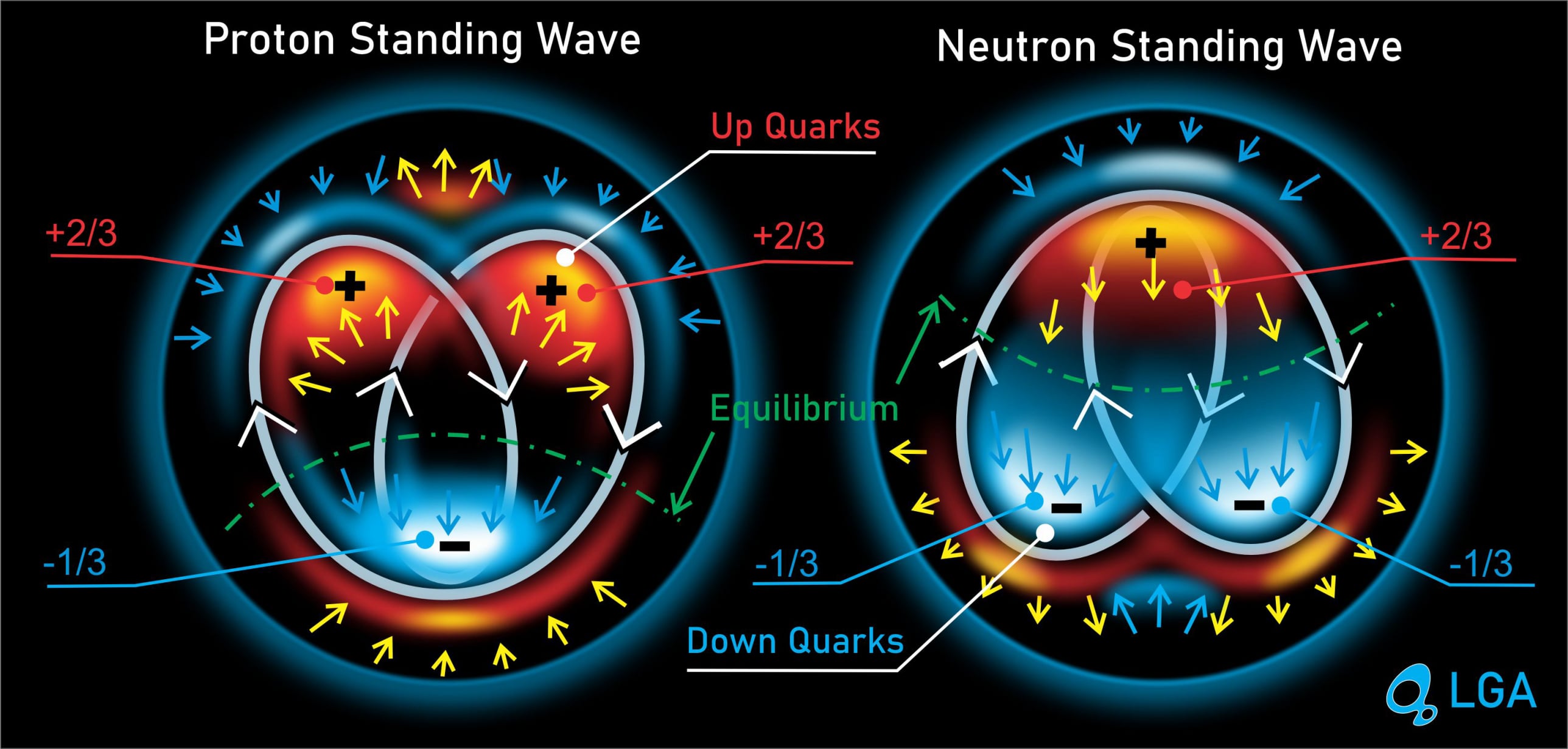
In the LGA view, nucleons are special standing waves: a single energy pulse confined to a closed, figure‑8 loop. As the wave oscillates between positive stretching and negative compression, it creates localized eddies of pressure — the up and down quark “regions.” These quark regions are not independent particles but patterns within the nucleon’s wave that compress and stretch surrounding space, appearing as the localized lumps described by particle physics.
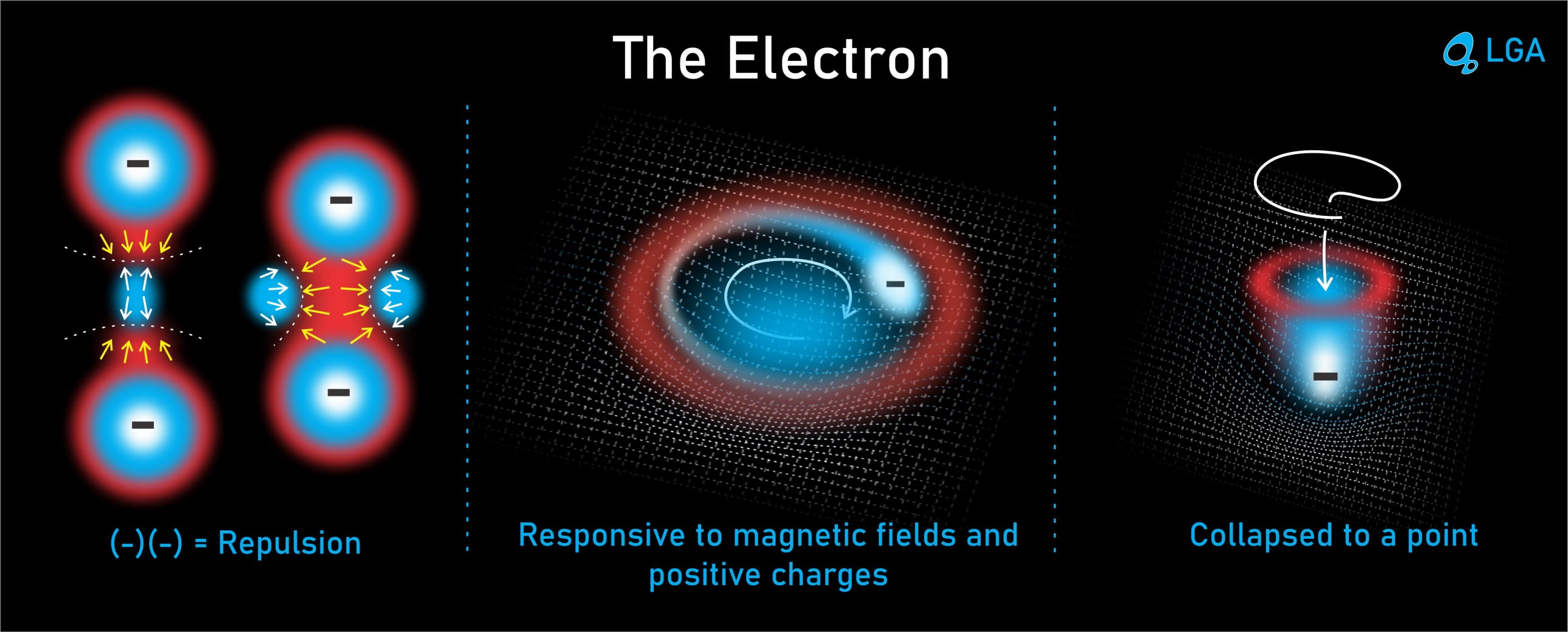
Electrons are often described as mysterious—behaving like particles or waves and appearing to change under observation. The LGA model offers a clear visualization: electrons are bubbles of negative pressure in a universal medium. Their shape and size respond to motion and external fields because negative pressure pulls inward rather than pushing outward.
Isolated electrons would be compact and non‑spinning. Inside atoms, however, electrons become tethered to the spinning, positively charged fields of nucleons and acquire corresponding spin characteristics. Like a water balloon that flattens into a disk as rotation increases, an electron’s shape and spin result from the balance between the tethering positive field and centrifugal forces. Free electrons can retain spin momentum and show wave‑like behavior, but their shape and motion change rapidly when they interact with atoms or other electrons. Tethered electrons align and move predictably in magnetic fields according to their magnetic moments; free electrons respond differently to magnetic fields because they are not constrained by the nucleon‑tethering.
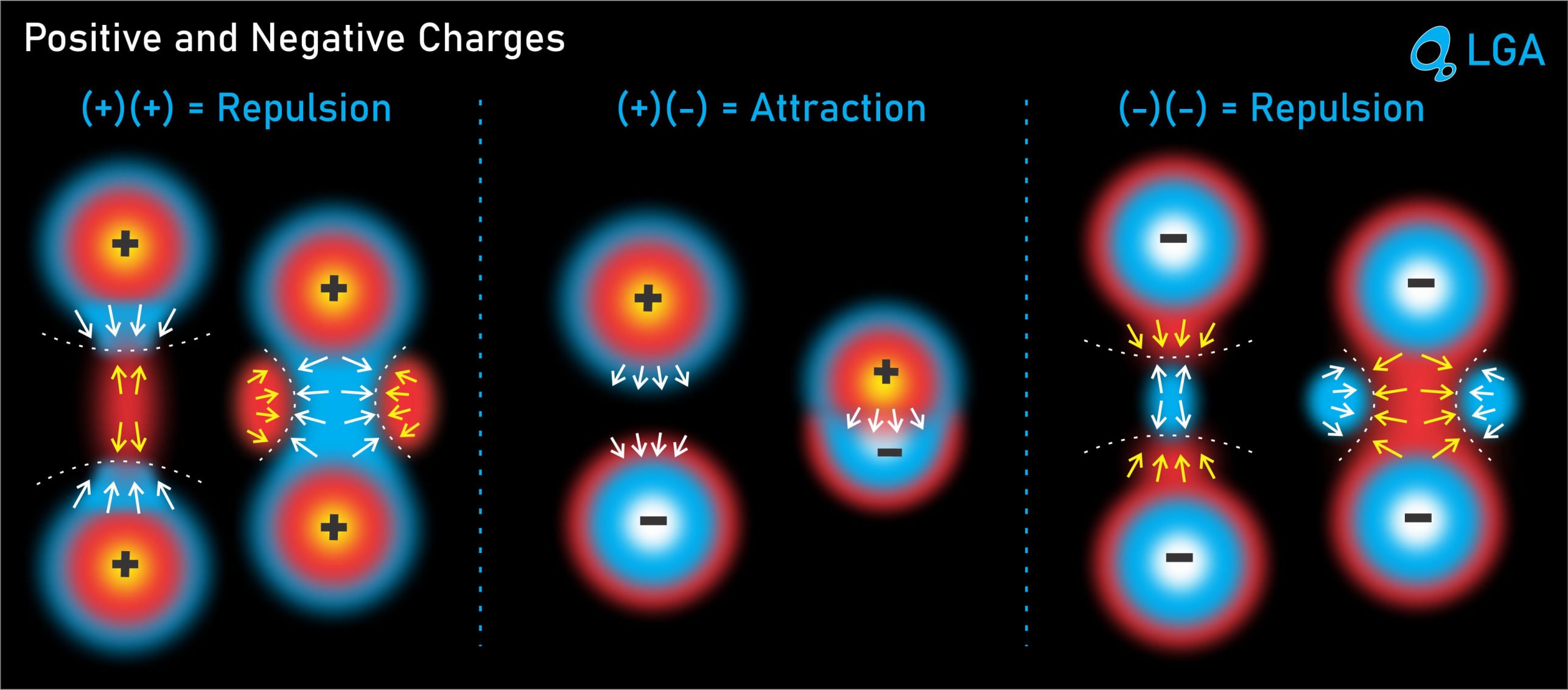
Although electrons are attracted to positive charges (regions of positive pressure), they do not attract one another despite their internal self‑centering. Each electron compresses the medium at its center while stretching it around the periphery. That stretched region acts like a taut rubber band: bringing two electrons closer requires extra energy to further stretch the medium, producing an effective repulsion between them.
What's the point of making detailed maps of atomic-nucleus structures? Technetium isotopes provide a clear example of why this is valuable. Two isotopes separated by a single neutron show dramatically different half-lives: one decays in about 4.28 days, while the other persists for roughly 4.21 million years. Mainstream models do not explain why this single-neutron difference produces such a large change or predict these outcomes reliably.
The LGA model lets you compare nuclear-structure maps side by side. Careful comparison shows that one technetium isotope has an “orphan” neutron, which is unstable and may be the primary cause for the short half-life compared to its relatively stable sibling. Having these side-by-side maps of the nucleus is like an MRI scan, allowing us to slice open the atom's internal structure and identify potential causes of instability.
Mass loss is the energy displacement that occurs when nucleons bind to form larger elements. Traditional scientific methods can only calculate the average mass loss per nucleon in larger atoms with limited accuracy—and even less so for smaller ones. The LGA model breaks down nuclei into stacked structures, identifying each separate touchpoint and calculating their individual mass losses with far greater precision. While a key component is figuring out how nucleons nest together, other factors—such as increasing density in successive layers—also boost mass-loss density. The mapping method enables us to pinpoint touchpoints via structure and account for layer-by-layer density increases, which together yield a much more accurate way to calculate overall mass loss.
Currently, this method is done manually, which is slow and limits our ability to test multiple configurations for the best solutions. We hope to gain support to develop software that can process all elements and isotopes in far shorter timeframes, then use it to search for new, potentially viable and stable elements.
Gravity remains mysterious in its ability to affect objects across vast distances. Newton introduced the inverse-square law to describe gravity mathematically, and Einstein refined those calculations with his field equations. Both theories encounter mathematical infinities that lead to singularities.
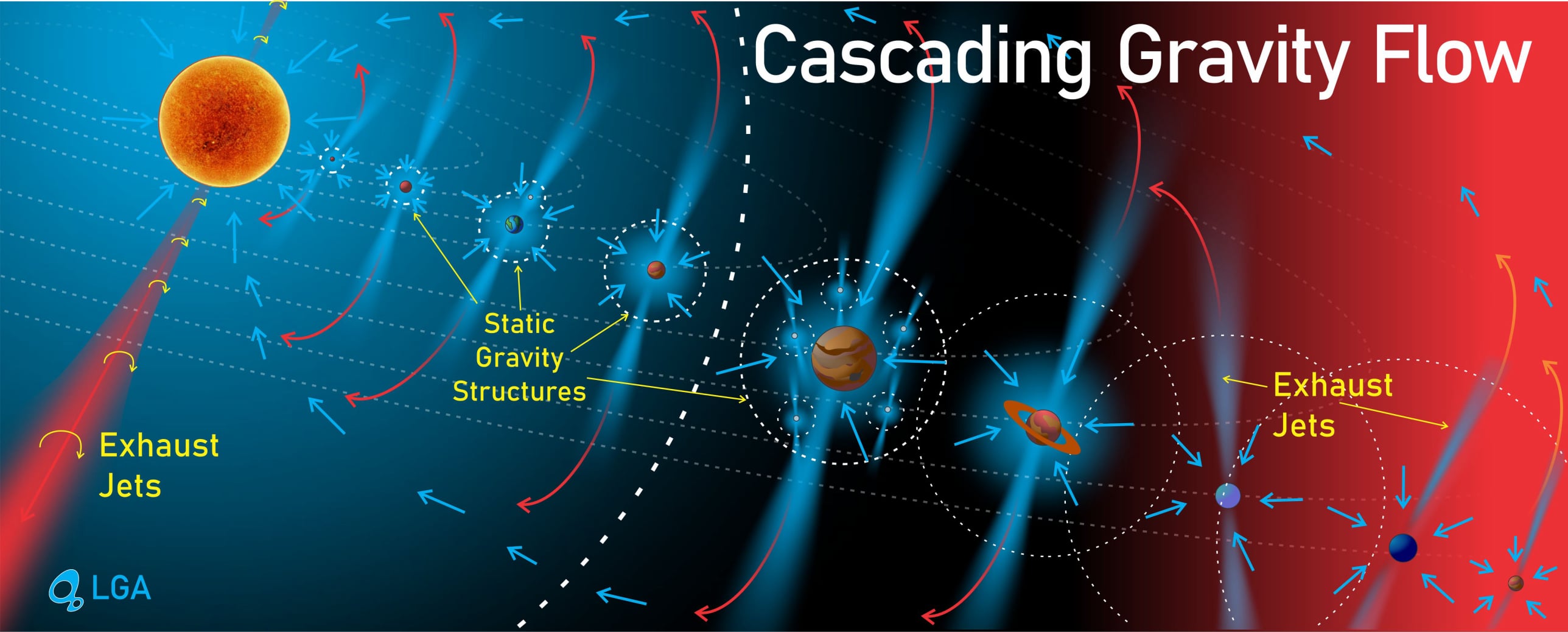
According to Newton’s inverse-square law, every object attracts every other object in the universe. The LGA model, however, proposes that an object’s range of attraction is limited when its gravitational pressure reaches equilibrium. Planets form static gravitational structures with boundaries that meet the corresponding pressure of their parent solar system. Excess gravity is not radiated outward like sunlight; instead, it is compressed toward the center of each massive object and expelled through the magnetic poles as gravitational exhaust jets. This structure repeats at each hierarchical level: solar systems discharge excess gravity into their parent galaxy, which ultimately funnels it to the central black hole and its far more powerful jets.
Another open question is the propagation speed of gravity. Einstein’s theory limits information to the speed of light, but his equations imply gravity must act effectively instantaneously to avoid orbital lag. The LGA model resolves this by proposing that gravitational structures are largely static and do not extend beyond their equilibrium boundaries. Space curvature is thus the physical result of gravitational pressure building up into static structures that interact in real time, rather than being mediated by gravitational radiation traveling many times the speed of light.
Gravitational waves produced by collisions travel at the speed of light, but gravitational attraction itself is presented in the LGA model as a static structure—what some call dark matter. Dark matter, in this view, accumulates over time and varies between galaxies according to their age and structural history.
The LGA model makes a testable prediction: gravity is a residual, static structure that can remain at a location in space after a body is displaced. In NASA’s 2022 asteroid deflection experiment (DART), a spacecraft deliberately altered the orbit of a small moonlet, producing a large debris plume. LGA predicts that when follow-up observations examine the system, they may find a small remnant body (a “ghost” moon) remaining near the original orbit. According to the model, some debris and loose material could re-accrete at the original gravitational equilibrium point, producing a distinct remnant that occupies the former orbital location despite the primary body having been pushed onto a new trajectory.
Read more: about Quantum Gravity
Based in Central Otago overlooking the mighty Clutha River, we — Mike Hodges and Catherine Mann — are building our dream home. Thinking about the universe has been an irresistible distraction. A casual conversation with Catherine’s brother, who holds a PhD in radio signals, sparked it: he joked that the explanation for entangled particles was “magic.” That quip—and the wider sense that the quantum world defies intuition—piqued my curiosity and set me on a deeper path.
The Liquid Gravity Atomic (LGA) model is the result of eight years of research and study seeking an intuitive explanation for quantum phenomena. Part of the journey is finding ways to fund experiments that can test LGA predictions, which led to the development of the Stability Island game. The game features an “elementary table” and a search for islands of stability among undiscovered elements. Both the game and the LGA model are works in progress, evolving alongside new discoveries.
Find out more about Stability Island
LGA aims to reveal the underlying “cogs and gears” that produce quantum behavior and to propose concrete, testable experiments that distinguish its predictions from standard theory.
Have some feedback or just want to say hi? Drop us a line!
at info@liquidgravity.nz