Emergent 

Quantum Spin

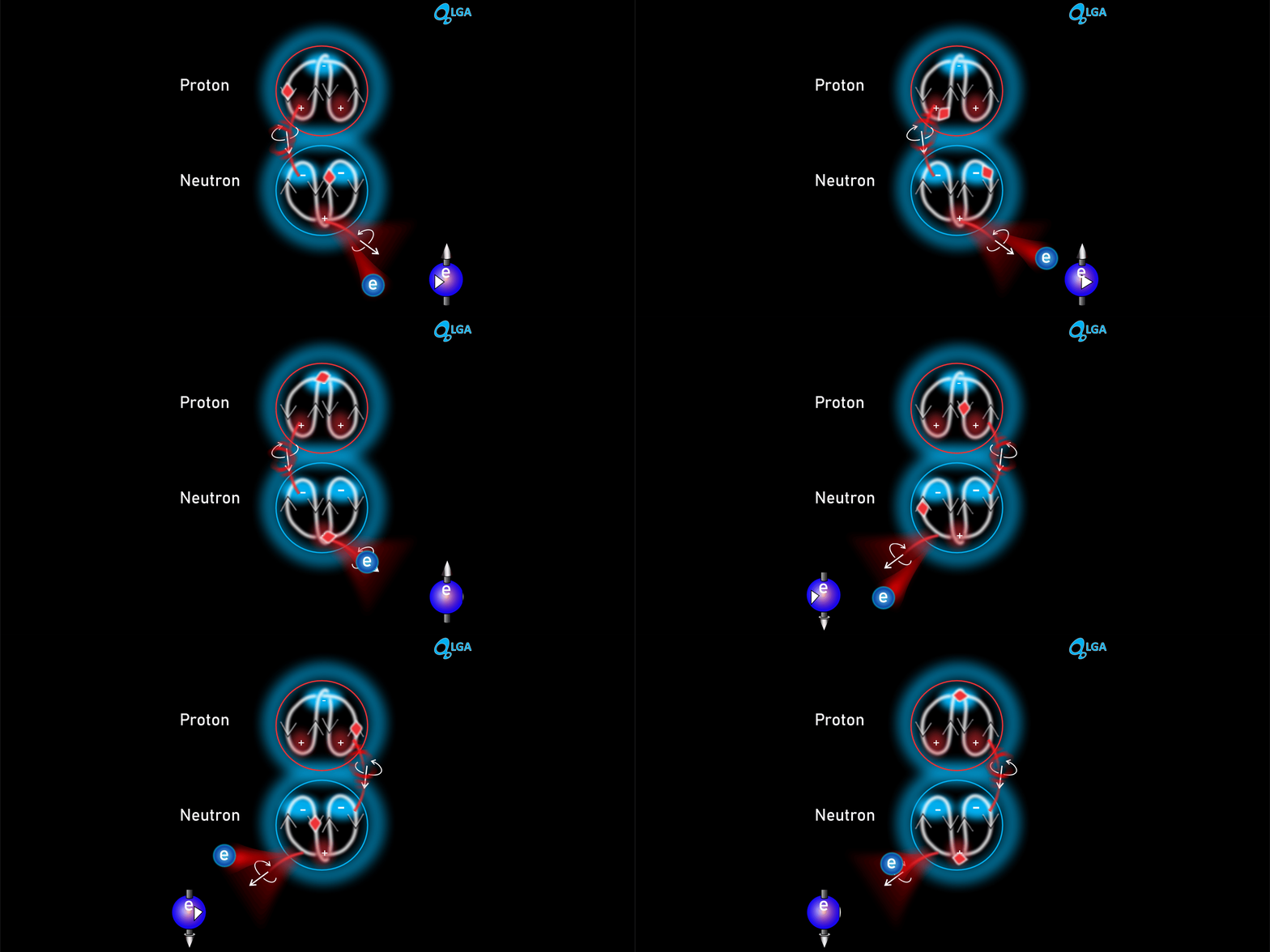
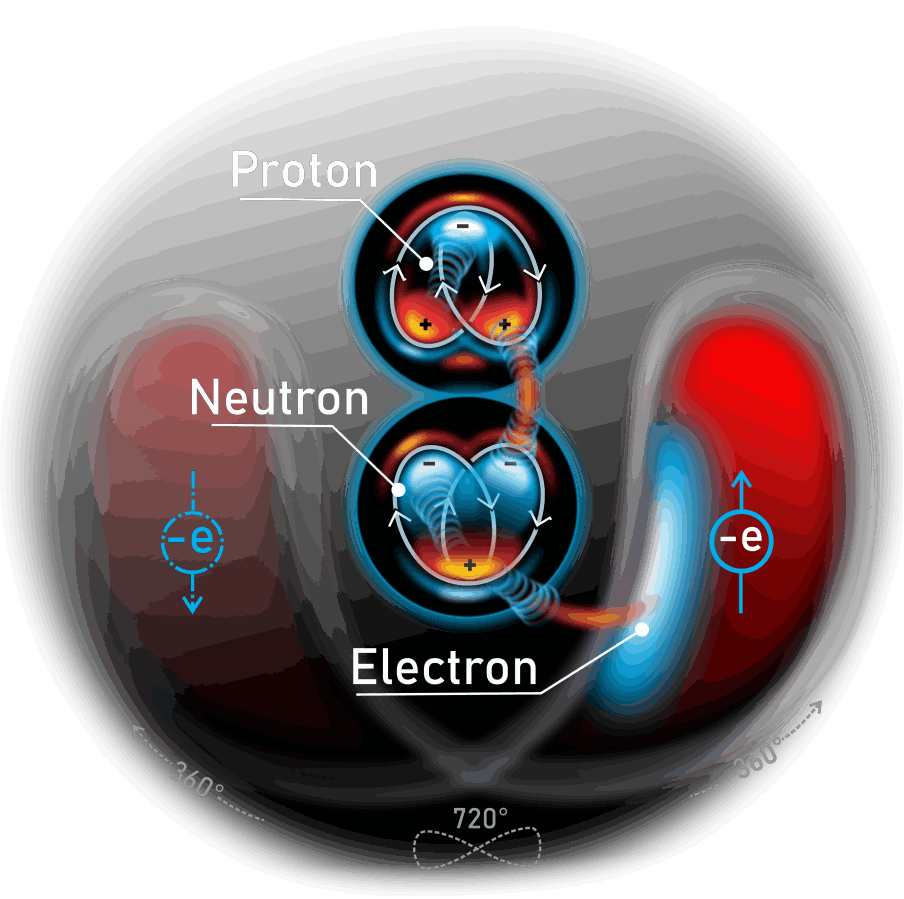
 The LGA model proposes that the apparent “spin” of the electron arises from wave motions generated by nucleons within the atomic nucleus. These internal motions produce dynamic, alternating left- and right-handed fields that drive the electron through a complete 720° rotational cycle. Within this framework, electron spin is not treated as an intrinsic, abstract quantum property but as an emergent consequence of underlying field dynamics.

Introduction to Spin

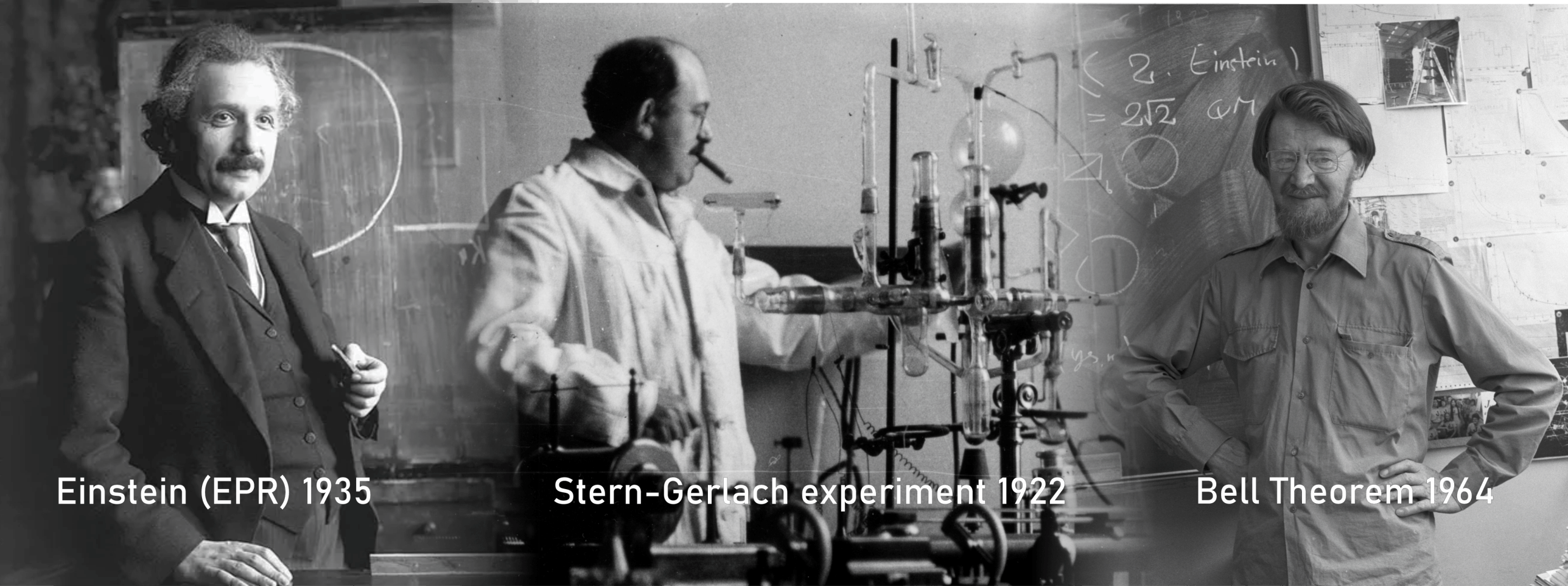
The spin of the electron is detectable through its faint magnetic signature, first observed in the Stern–Gerlach experiment. This experiment produced two distinct orientations—commonly described as “spin-up” and “spin-down”—which led to the characterization of the electron as a spin-½ particle within Quantum Mechanics. The requirement that a spin-½ particle undergo a 720° rotation to return to its original state has traditionally been interpreted as an intrinsic property of the electron.

If such rotational behaviour were a literal physical motion, it would imply the existence of an underlying mechanism or force capable of continuously driving this rotation. The LGA model proposes an alternative interpretation. Rather than possessing an intrinsic spin, the electron is described as a negative-pressure bubble that responds to positive-pressure fields generated by the nucleons within the atomic nucleus. In this framework, the apparent spin behaviour arises from the dynamic interaction between the electron and alternating fields produced by nucleon wave motion, which generate alternating left- and right-handed field structures.

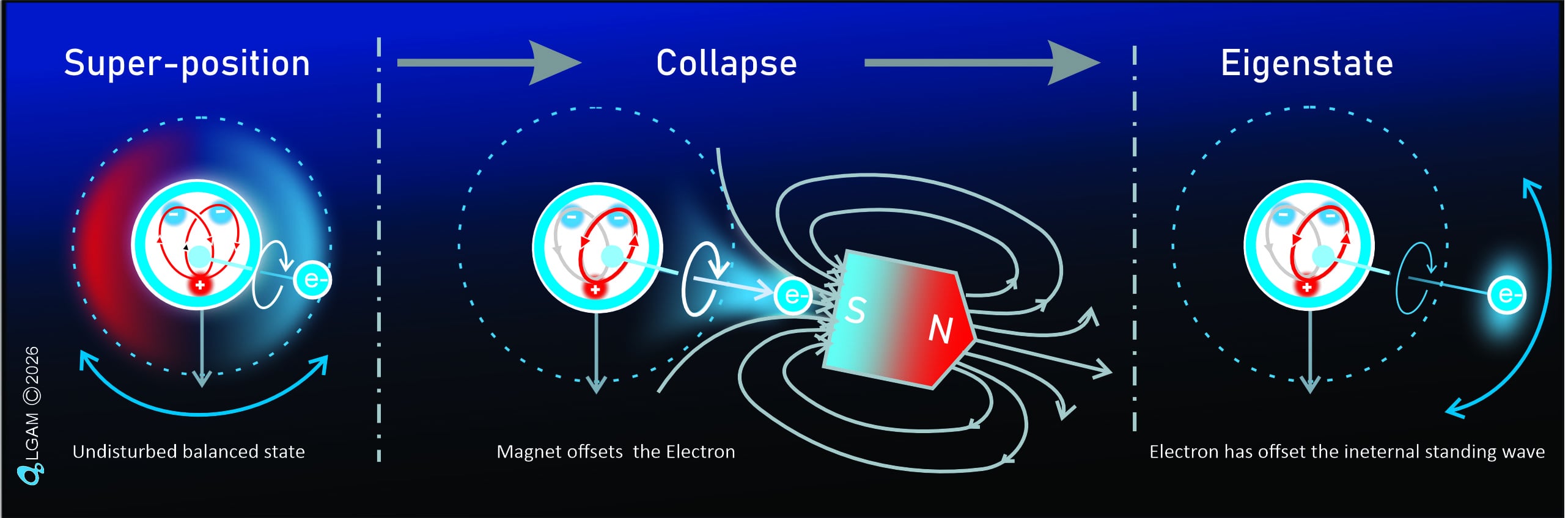
The LGA model also examines quantum phenomena including Quantum Entanglement, Quantum Superposition, the Eigenstate, and Wavefunction Collapse. Rather than interpreting these effects as fundamentally probabilistic, the model proposes that they may arise from underlying causal processes associated with structured interactions between nucleon-generated fields and electron motion.

Debate within the physics community has long centred on the mechanisms responsible for these quantum phenomena and whether they arise from deterministic cause-and-effect processes or represent fundamentally probabilistic behaviour intrinsic to nature.

The LGA model aligns conceptually with the position of Albert Einstein, who argued that quantum phenomena should ultimately be explainable through deterministic physical mechanisms consistent with classical principles. In the EPR paper, Einstein and his collaborators proposed that entangled particles must possess hidden variables governing their correlated behaviour across distance.

Subsequently, John Bell proposed a method to experimentally test the hidden-variable hypothesis through what are now known as Bell's Theorem and Bell Inequalities. Experimental tests of these inequalities have consistently supported the probabilistic predictions of quantum mechanics over models based on predetermined hidden variables.

The LGA model proposes a potential resolution to this long-standing controversy by introducing the concept of dynamic hidden variables. Unlike the static, predetermined hidden variables assumed in Bell-type analyses, the LGA framework suggests that hidden variables may arise dynamically from oscillatory spin behaviour within nucleons. In this view, the internal oscillatory dynamics of nucleons generate evolving field structures that influence electron behaviour, producing statistical outcomes that appear probabilistic while still emerging from underlying causal mechanisms.
       

Spin Mechanism

The spin path followed by an electron originates from the standing-wave structure of the proton. In the LGA model, this standing wave is confined to a closed-loop trajectory that crosses its own path, forming a figure-eight–like circuit. This geometry generates alternating field orientations that serve as the basis for the electron’s motion around the nucleus.

The surrounding dense superfluid medium produces eddies and vortex fluctuations that periodically project localized positive charge pulses into nearby nucleons. These nucleons contain corresponding negative terminals that receive the incoming charge. The resulting pulse propagates through chains of adjacent neutrons within the nucleus, creating a cascading transmission of energy through the nucleon network. When the pulse reaches the boundary of the chain, it is emitted into the surrounding nuclear region, forming a dynamic field structure.

The electron is attracted to this field and follows an alternating trajectory defined by the field geometry. As it responds to the alternating left- and right-handed field orientations, the electron traces a repeating 720° path that manifests as the observed spin-up and spin-down orbital states.


Research

Paper

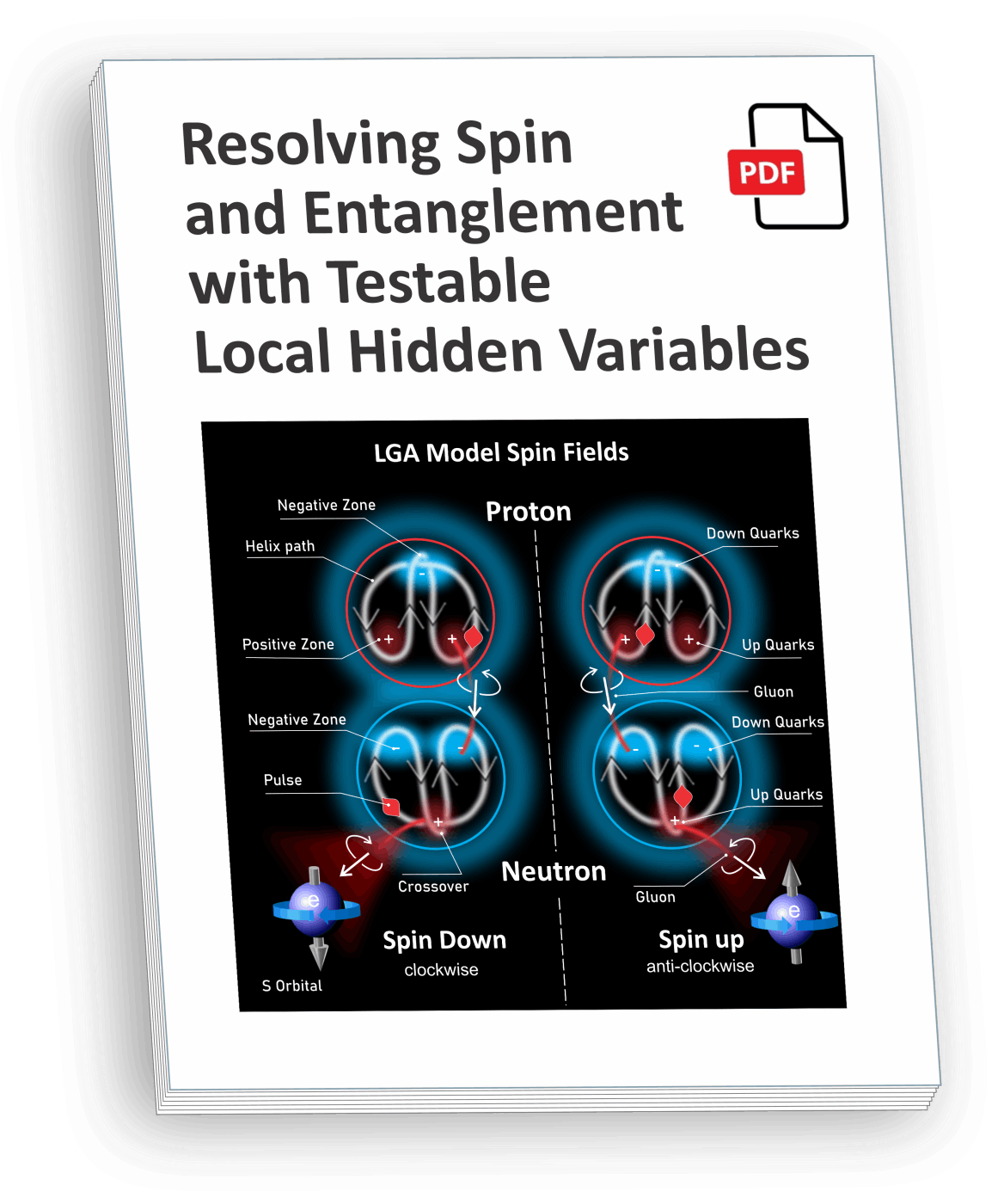
This paper presents an overview of the proposed LGA spin mechanism and a set of experiments designed to test whether hidden variables may underlie quantum behaviour. It explores the historical debate over quantum probability and revisits the ideas of Albert Einstein, who suggested that unseen variables might govern the behaviour of entangled particles.

Building on this perspective, the LGA model proposes a physical mechanism that could produce the statistical outcomes observed in Quantum Mechanics while still arising from underlying causal processes.

Predicting Quantum Spin

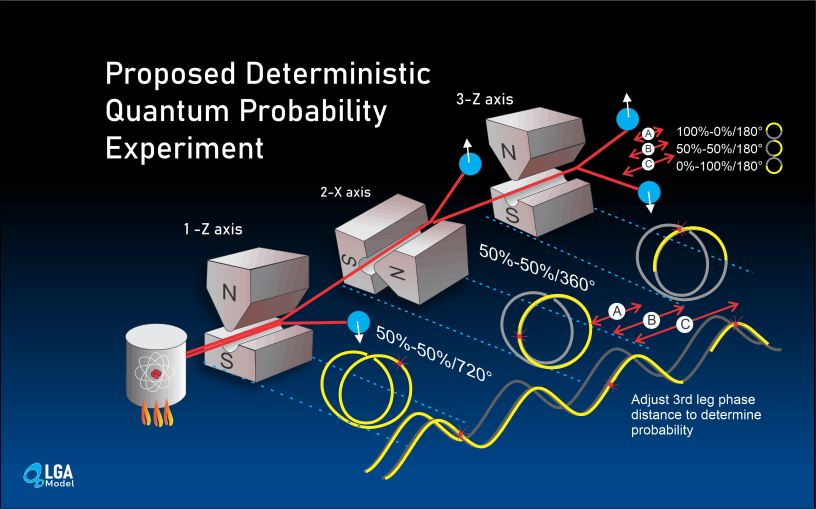
The Liquid Gravity Atomic (LGA) spin mechanism proposes experimentally distinguishable predictions from conventional quantum mechanics. Using a three-stage Stern–Gerlach setup, the experiment narrows the atomic pulse so that by tuning the distance between the second and third splitters to match the atoms’ de Broglie wavelength and velocity, the pulse can be confined to either the upper or lower beam at the final splitter. LGA predicts that this distance control will deterministically set the spin outcome, whereas standard quantum mechanics predicts a 50/50 probability for spin-up or spin-down regardless of the distance setting.

Download the PDF full paper here:

Overview— 3‑Stage Stern–Gerlach Test of the LGA Spin Model

Stage 0 — Source: Coherent silver atoms are emitted from an oven; each atom’s unpaired electron carries a spinor state that evolves with the atom’s local S‑orbital pulse trajectory.

Stage 1 — First splitter (0°): An inhomogeneous magnetic field at 0° projects atoms into east/west detector eigenstates, yielding an ≈50:50 split. After projection the atom’s rotation signature reduces from a 720° spinor to a 360° branch rotation.

Stage 2 — Second splitter (90°): Atoms labeled “up” from Stage 1 pass through a 90° field that separates pulse phases into north/south hemispheres, producing roughly equal populations in the up/down states.

Stage 3 — Final splitter (0° with tunable spacing): The distance between Stage 2 and Stage 3 is adjustable to control pulse-phase evolution via particle wavelength and velocity. By matching this interstage spacing to the pulse period, the arriving pulse band can be steered predominantly into the upper or lower beam, enabling deterministic biasing of the final up/down outcome according to the LGA prediction.


Conclusion: The three‑stage experiment is feasible and provides a clear test: reproducible biasing of final outcomes by interstage spacing would support the LGA mechanism; failure to bias outcomes would falsify it, constraining this class of local‑variable models.

Opportunity:
The Liquid Gravity Project plans a fundraising campaign to acquire experimental equipment and form a collaboration with a willing university to carry out the research. A successful outcome could shed light on atomic mechanisms and help explain the persistent probabilistic behaviors observed in quantum systems.


Send Us Your Thoughts

Have some feedback or just want to say hi? Drop us a line!
at info@liquidgravity.nz

© 2026 Liquid Gravity Atomic Model