Testable 

Experiments

Liquid Gravity Atomic (LGA) — Testable Alternatives to Quantum Theory

The Liquid Gravity Atomic (LGA) model proposes a series of practical experiments designed to validate its core claims. These experiments are feasible with current laboratory capabilities and offer concrete, testable predictions that contrast with standard quantum mechanics, quantum gravity, and particle-physics expectations. By providing experimentally falsifiable avenues, LGA opens new directions for empirical investigation and constructive challenge to prevailing theories.       

Proposed Experiments

3 stage Stern-Gerlach Experiment

3 Stage Stern-Gerlach 

Testing Quantum Mechanics

The Stern–Gerlach experiment unlocked the mystery of quantum spin and probability. LGA now proposes plausible, testable explanations that could shed new light on why those quantum outcomes occur

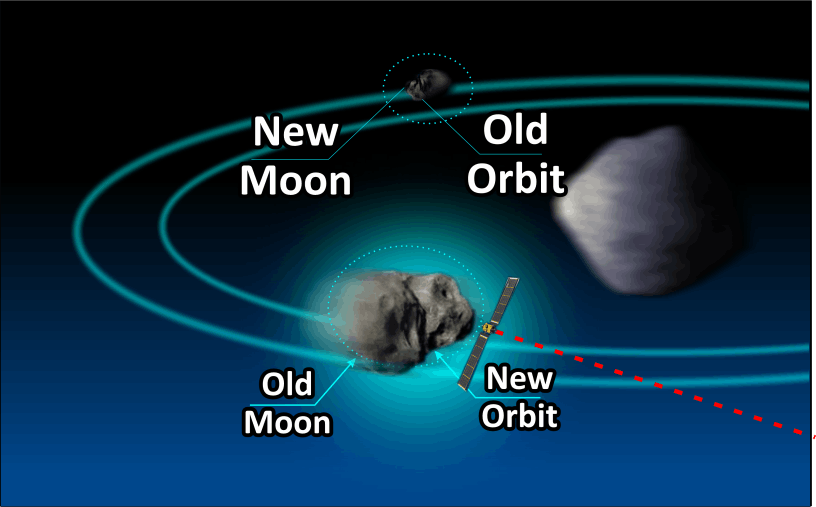
Dart Asteroid Interception New Orbit

Mapping Asteroid Collision

Testing for Residual Gravity

The Liquid Gravity (LG) theory predicts a residual gravitational signature that may be observable during NASA’s planned re-visit to the asteroid redirection mission, offering a concrete opportunity for experimental verification

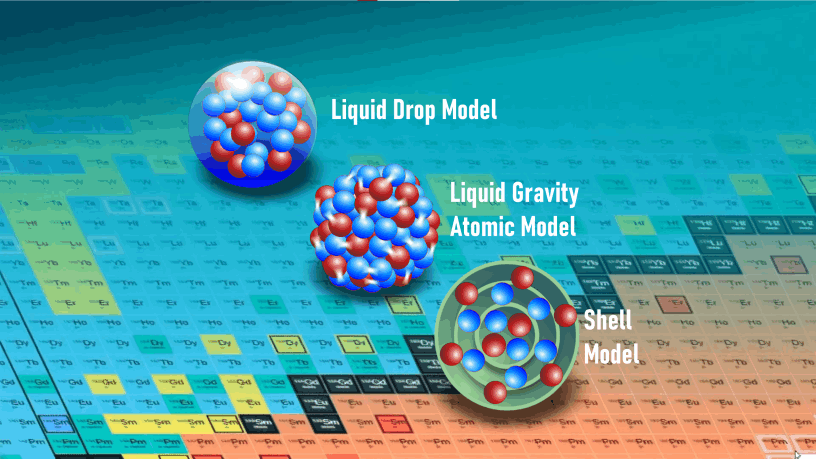
The Three Atomic Models

Atomic Models

Test for the atomic model

After 90 years of accepted theory, LGA steps forward with experimentally testable methods to challenge conventional atomic models and redefine how we identify atomic structure.

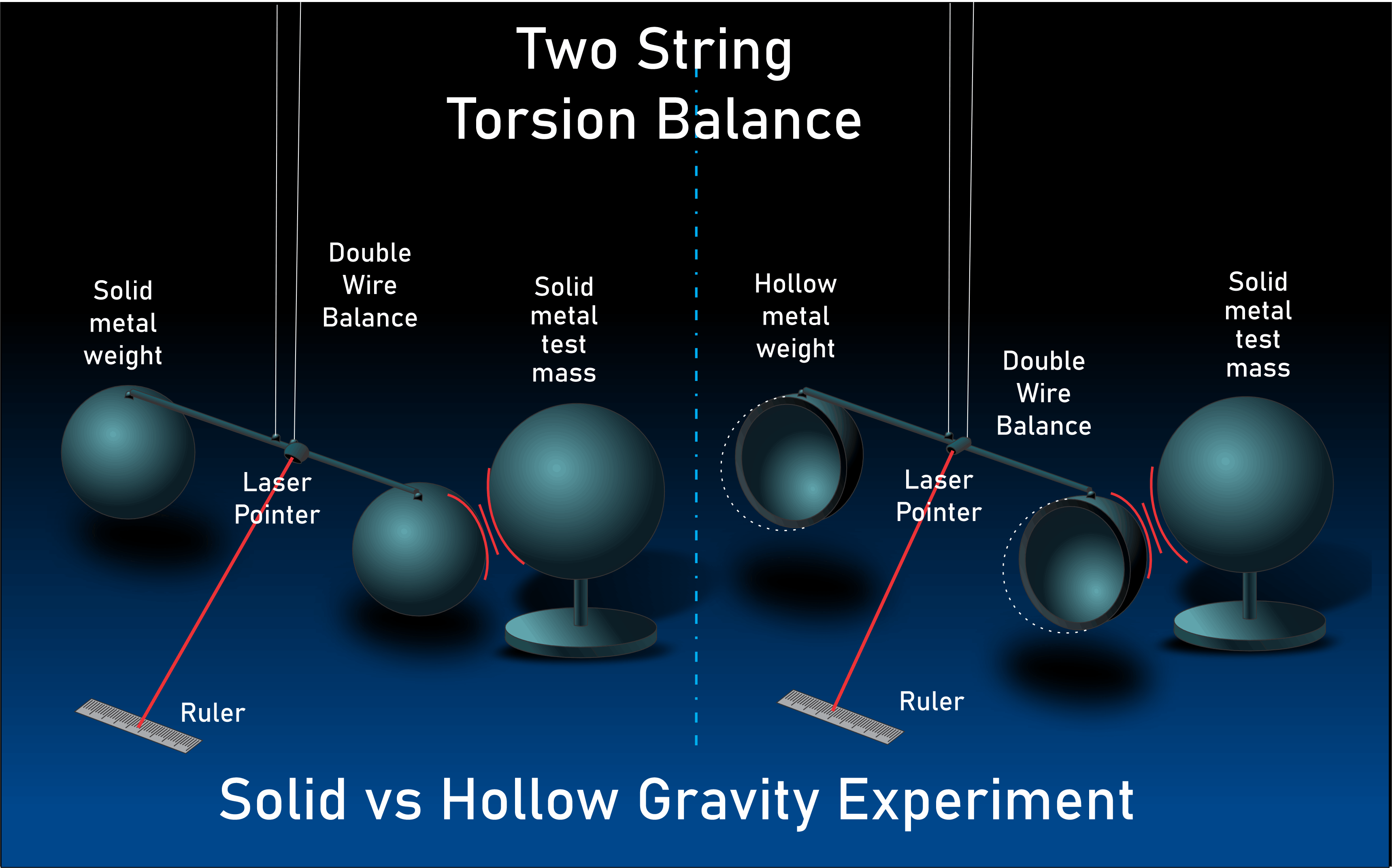
Hollow Sphere Gravity Test

Hollow Gravity Experiment

Compare hollow and solid cylinders 

This experiment aims to test the proposition that submerged gravity is less attractive by comparing two spheres of the same diameter—one solid and one hollow—with the prediction that they should provide similar results.

Predicting Quantum Spin

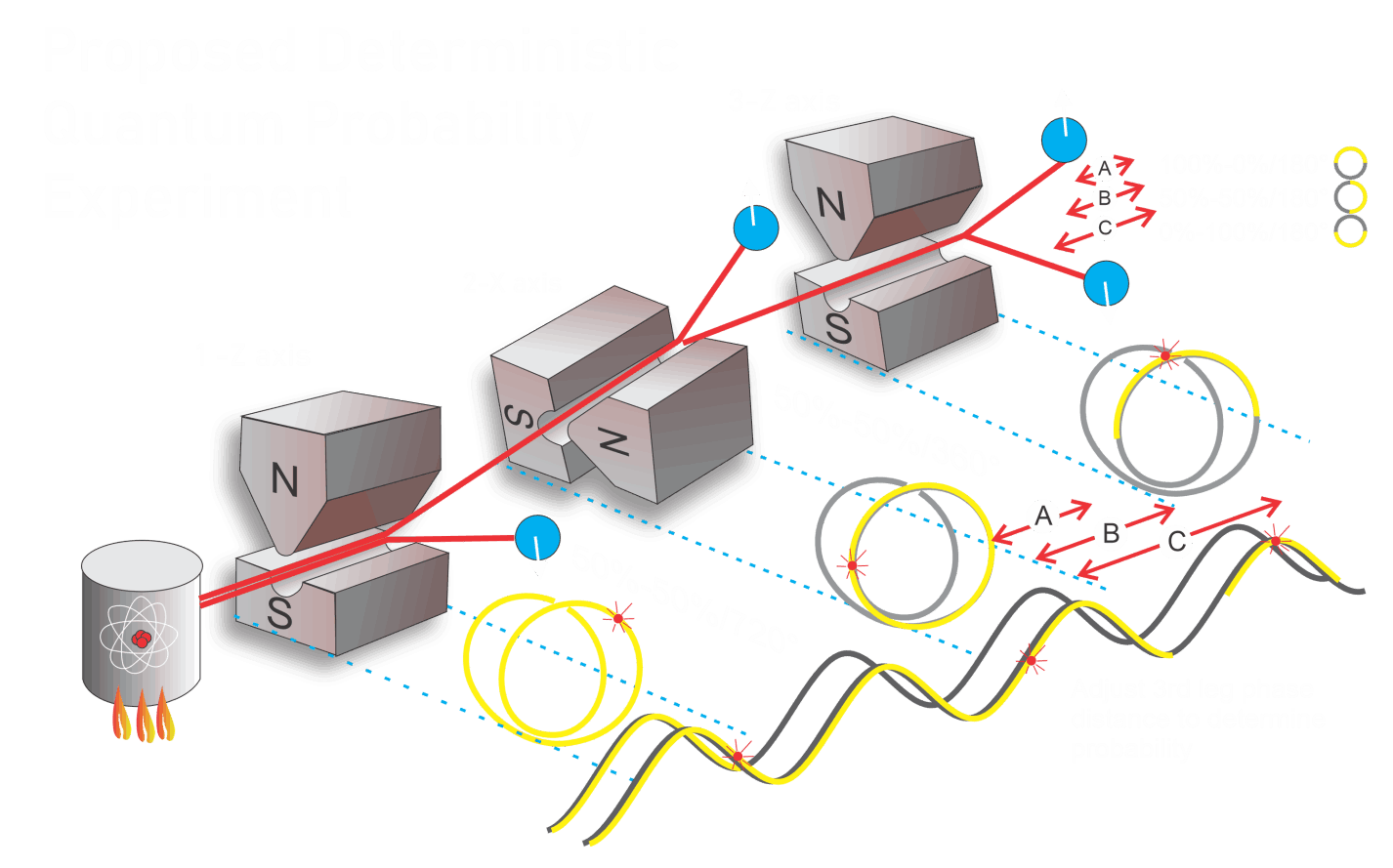
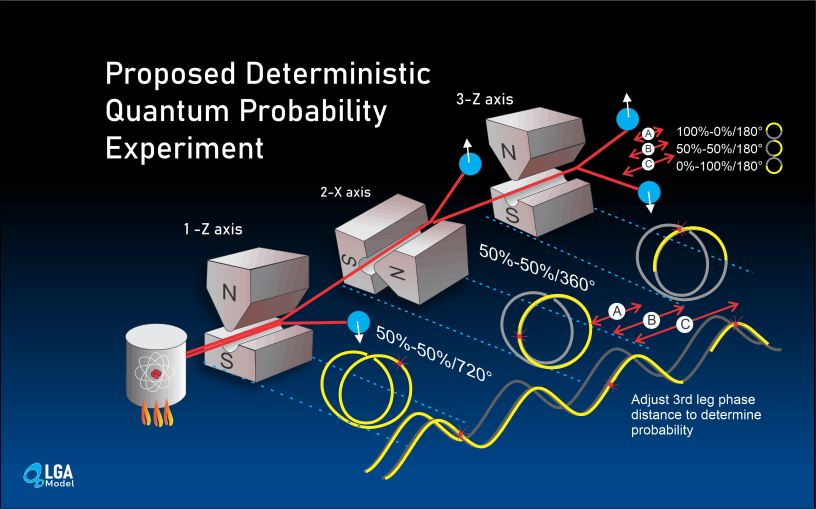
The Liquid Gravity Atomic (LGA) spin mechanism proposes experimentally distinguishable predictions from conventional quantum mechanics. Using a three-stage Stern–Gerlach setup, the experiment narrows the atomic pulse so that by tuning the distance between the second and third splitters to match the atoms’ de Broglie wavelength and velocity, the pulse can be confined to either the upper or lower beam at the final splitter. LGA predicts that this distance control will deterministically set the spin outcome, whereas standard quantum mechanics predicts a 50/50 probability for spin-up or spin-down regardless of the distance setting.

Download the PDF full paper here:

Overview— 3‑Stage Stern–Gerlach Test of the LGA Spin Model

Stage 0 — Source: Coherent silver atoms are emitted from an oven; each atom’s unpaired electron carries a spinor state that evolves with the atom’s local S‑orbital pulse trajectory.

Stage 1 — First splitter (0°): An inhomogeneous magnetic field at 0° projects atoms into east/west detector eigenstates, yielding an ≈50:50 split. After projection the atom’s rotation signature reduces from a 720° spinor to a 360° branch rotation.

Stage 2 — Second splitter (90°): Atoms labeled “up” from Stage 1 pass through a 90° field that separates pulse phases into north/south hemispheres, producing roughly equal populations in the up/down states.

Stage 3 — Final splitter (0° with tunable spacing): The distance between Stage 2 and Stage 3 is adjustable to control pulse-phase evolution via particle wavelength and velocity. By matching this interstage spacing to the pulse period, the arriving pulse band can be steered predominantly into the upper or lower beam, enabling deterministic biasing of the final up/down outcome according to the LGA prediction.


Conclusion: The three‑stage experiment is feasible and provides a clear test: reproducible biasing of final outcomes by interstage spacing would support the LGA mechanism; failure to bias outcomes would falsify it, constraining this class of local‑variable models.

Opportunity:
The Liquid Gravity Project plans a fundraising campaign to acquire experimental equipment and form a collaboration with a willing university to carry out the research. A successful outcome could shed light on atomic mechanisms and help explain the persistent probabilistic behaviors observed in quantum systems.


The 3 stage Stern-Gerlach Experiment

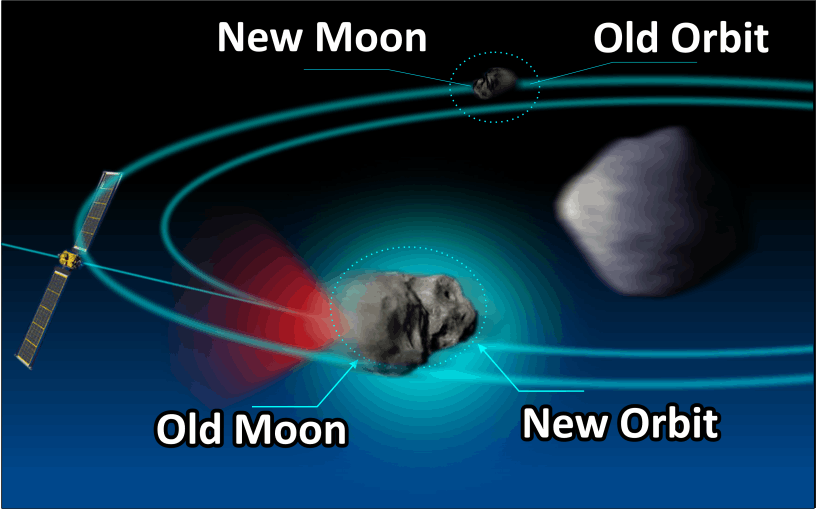
Mapping Asteroid Collision


The European Space Agency (ESA) launched the Hera mission in October 2024 to investigate the DART impact site. Hera is scheduled to arrive at the asteroid Dimorphos in December 2026 to perform a detailed post‑impact survey of the crater and the asteroid’s altered orbit.

This event offers a once‑in‑a‑lifetime opportunity to search for evidence of a small new moon occupying Dimorphos’s former orbit. The LQA model predicts that gravity arises from accumulated negative pressure that builds around bodies over long timescales. When Dimorphos was displaced, it should have left behind its original gravitational structure, which would remain near its original orbit. This residual gravity well could still influence surrounding material by distorting Dimorphos’s new orbital path or by attracting debris that could coalesce into a small new moon at the original location. Observation of either outcome would provide evidence for residual gravity formations. Such a finding could further suggest that dark matter is an overabundance of accumulated gravity that becomes detectable through unexpected galaxy rotation curves and gravitational lensing.

Opportunity:
The Liquid Gravity Project intends to engage the European Space Agency to request consideration of targeted observations related to this research. These requests would not interfere with existing mission plans, but if carried out and yielding positive results, they could open a new, real‑world avenue for studying gravity and dark matter.


Dart Asteroid Collision New Moon

Comparing Atomic Models

Old Models:
The two principal models used today to describe the atomic nucleus are the liquid‑drop model and the shell model, which together account for different aspects of nuclear behavior. The liquid‑drop model treats the nucleus like a charged liquid drop, with binding energy arising from volume, surface, Coulomb, asymmetry, and pairing terms—explaining fission and average binding‑energy trends. The shell model views nucleons as independent particles in a mean potential with quantized energy levels and strong spin–orbit coupling, accounting for magic numbers, closed‑shell stability, and detailed spectroscopic properties. That these two nearly century‑old, seemingly different pictures both describe aspects of the same system illustrates how science uses complementary, sometimes contrasting, models to represent a single natural world.

New Model:
The Liquid Gravity Atomic (LGA) model proposes a single framework intended to replace these historic models by describing the underlying mechanism of atomic structure while improving predictive accuracy. Its key feature is a well‑defined structure that yields quantifiable outcomes claimed to match observations more closely: it reportedly predicts individual nucleon loss‑masses with higher accuracy, explains why neutrons stabilize nuclei, identifies configurations that trigger fission and fusion, and offers a framework to explore novel elements and isotopes that could guide future discoveries.
Read more about the LGA model

Opportunity:
The Liquid Gravity Project aims to turn the new atomic model into a software tool that rapidly assembles isotope configurations and compares its predictions to existing models and experimental data. By exploring multiple candidate configurations for each element and isotope and tuning model parameters, the application will iteratively improve accuracy and become a practical research aid for studying nuclear properties and guiding experimental discovery.
       

Liquid Gravity Atomic Model

Hollow Gravity Experiment

One of the biggest mysteries in science is how gravity fits into the quantum world. Classical theories (Newton and Einstein) assume gravity scales uniformly with mass at all scales. The LGA model contends gravity behaves differently inside objects, identifying three factors that could make gravity significant at the quantum level. One factor is "submerged gravity": observations suggest nucleons deeper inside a nucleus lose some gravitational coupling. If true, submerged mass inside a planet would undergo similar gravitational decoupling, implying that an object's active gravity may be concentrated in its surface regions. 

(Read more about Submerged Gravity)

The proposed Hollow Gravity Experiment tests this hypothesis: a hollow metal sphere with less mass but the same diameter as a solid sphere should exhibit similar gravitational attraction if submerged/inner mass contributes less. The plan uses two rigs with comparable rest masses and a hanging bar with hollow and solid test masses. Instead of a torsion balance, the setup uses a pair of wiles (with a preferred resting position); with sufficient leverage and spacing the rig should rotate to a new equilibrium determined by gravitational attraction. Repeating measurements and comparing the two rigs for consistent differences would reveal any divergence. Conventional expectations predict the hollow sphere will be less attractive than the solid sphere.


Opportunity:
The Liquid Gravity Project will build an experimental apparatus to test and tune model parameters, then perform a series of repeatable measurements to identify consistent effects. After establishing robust laboratory results, we will seek a university collaboration to independently confirm the observations. The LGA model predicts similar gravitational effects for solid and hollow spheres of the same diameter but different masses; classical Newtonian gravity predicts attraction proportional to total mass. If the LGA prediction is confirmed, it would motivate reexamination of foundational assumptions about gravity and open new directions for theoretical and experimental research.


Hollow Sphere Gravity Experiment

Help us make these experiments happen

Want to get involved or just want to say hi? Drop us a line!
at info@liquidgravity.nz

© 2026 Liquid Gravity Atomic Model